Category: Tracking
Industry: Retail
Project type: Audit and implementation
Completed: June 2026
Delivery: 30 specialist hours
Platforms: GA4, GTM, Google Ads, Meta and TikTok
A digital audit identified duplicated tracking, inconsistent conversion logic and unreliable campaign attribution across GA4, Google Tag Manager, Google Ads, Meta and TikTok.
The client reviewed the findings, agreed with the recommended priorities and approved the highest-impact fixes. The core tracking framework was then rebuilt and standardised across all platforms.
Project overview
| Project facts | Details |
|---|---|
| Service | Digital audit and tracking implementation |
| Platforms aligned | GA4, GTM, Google Ads, Meta and TikTok |
| Issues identified | Duplicated tags, inconsistent conversion logic and fragmented tracking methods |
| Tracking cleanup | 45 GTM tags reviewed, with legacy and duplicated tags removed |
| Conversion framework | 4 core lead events rebuilt and shared across all platforms |
| Engagement tracking | Product page view event added for remarketing |
| Project approach | Audit first, followed by approved implementation |
| Total project effort | Audit and implementation completed in 30 specialist hours |
The challenge
The business was running active advertising across several platforms, but its tracking environment had developed through multiple historical implementations.
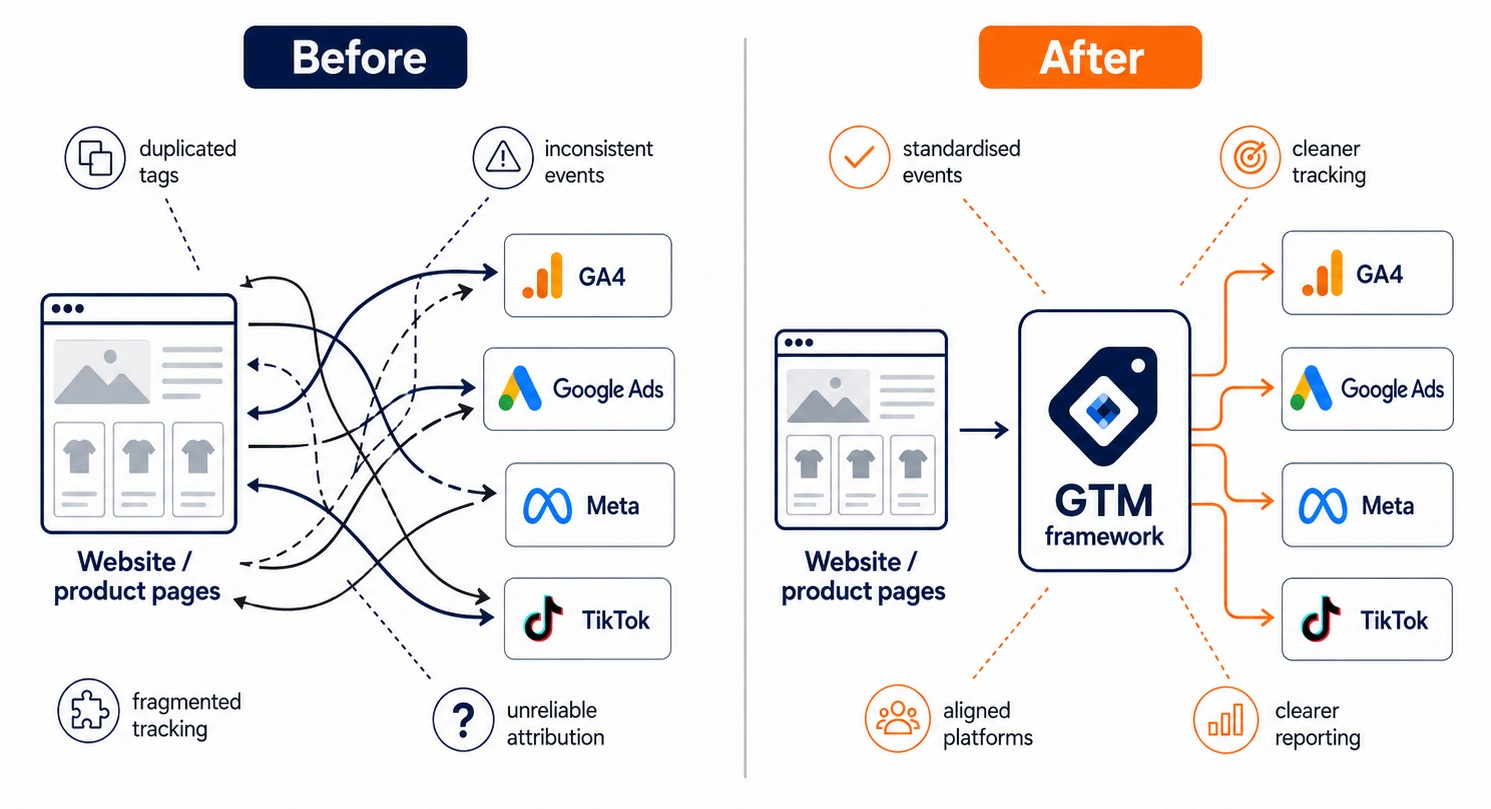
The audit identified duplicated and legacy tags, inconsistent conversion events, different platforms measuring different stages of the enquiry journey, unreliable UTM naming and gaps in remarketing and exclusion audiences. The GTM container alone contained 45 tags, including paused and legacy implementations.
The issue was not only reporting accuracy. Advertising platforms were receiving different conversion signals, which could affect campaign optimisation, audience quality and budget efficiency.
Audit first, implementation second
The project began with a detailed audit of campaign structure, conversion tracking, GA4, GTM, attribution and audience management.
The audit produced a prioritised roadmap, with tracking reliability and optimisation signal quality identified as the first areas to address. The client reviewed the findings and approved the recommended priority implementation work.
This created a clear scope and allowed the project to move quickly from diagnosis to implementation.
What was delivered
Nine priority improvements were completed:
- removed duplicated and legacy GTM tags
- created four standardised lead conversion events
- aligned GA4, Google Ads, Meta and TikTok around the same conversion framework
- rebuilt Meta tracking through GTM
- rebuilt TikTok tracking through GTM
- simplified Google Ads conversion tracking
- added product page engagement tracking
- created remarketing and lead-exclusion audiences
- standardised campaign names and UTM parameters
Supporting documentation was also provided, including an event framework, UTM builder, campaign migration mapping and audience structure.
How the work was completed efficiently
The work was completed across two focused phases: audit and prioritisation, followed by implementation and validation.
The audit and priority implementation required approximately 30 hours of specialist work.
Focusing first on the highest-impact issues allowed the core tracking structure to be improved without turning the project into a long platform rebuild.
The time required for similar projects will depend on the number of platforms, forms and existing tracking methods.
Before and after
| Before | After |
|---|---|
| Different conversion logic across platforms | One standard conversion framework |
| Legacy and duplicated tracking | Simplified GTM structure |
| Different platforms measuring different stages | Shared completed-conversion events |
| Inconsistent campaign attribution | Standard UTM naming |
| Broad website remarketing | Product-page engagement audiences |
| Limited lead exclusions | Cross-platform exclusion audiences |
| Difficult long-term maintenance | Documented and governed setup |
The outcome
The business moved from multiple competing tracking methods to one governed event framework across four advertising and analytics platforms.
Four core lead events were standardised across GA4, Google Ads, Meta and TikTok. A separate product-page engagement event was introduced to support stronger remarketing audiences without confusing advertising platforms with lower-value conversion signals.
- more consistent conversion reporting
- clearer optimisation signals
- reduced risk of duplicated conversions
- stronger remarketing and exclusion audiences
- more reliable campaign attribution
- simpler future maintenance and troubleshooting
Is your tracking difficult to trust?
KNOP can audit your existing setup, identify the priority issues and implement the agreed fixes without a long agency process.